

FAQ
Church Family,
On Sunday, May 17, I shared with you details of my recent health journey and diagnoses. Here you’ll find the video from that service, a section of initial Frequently Asked Questions (FAQs), and resources on these topics and more. As always, please don’t hesitate to reach out for connection and conversation.
I’m grateful to share this life and faith with you.
Take care,
Scott
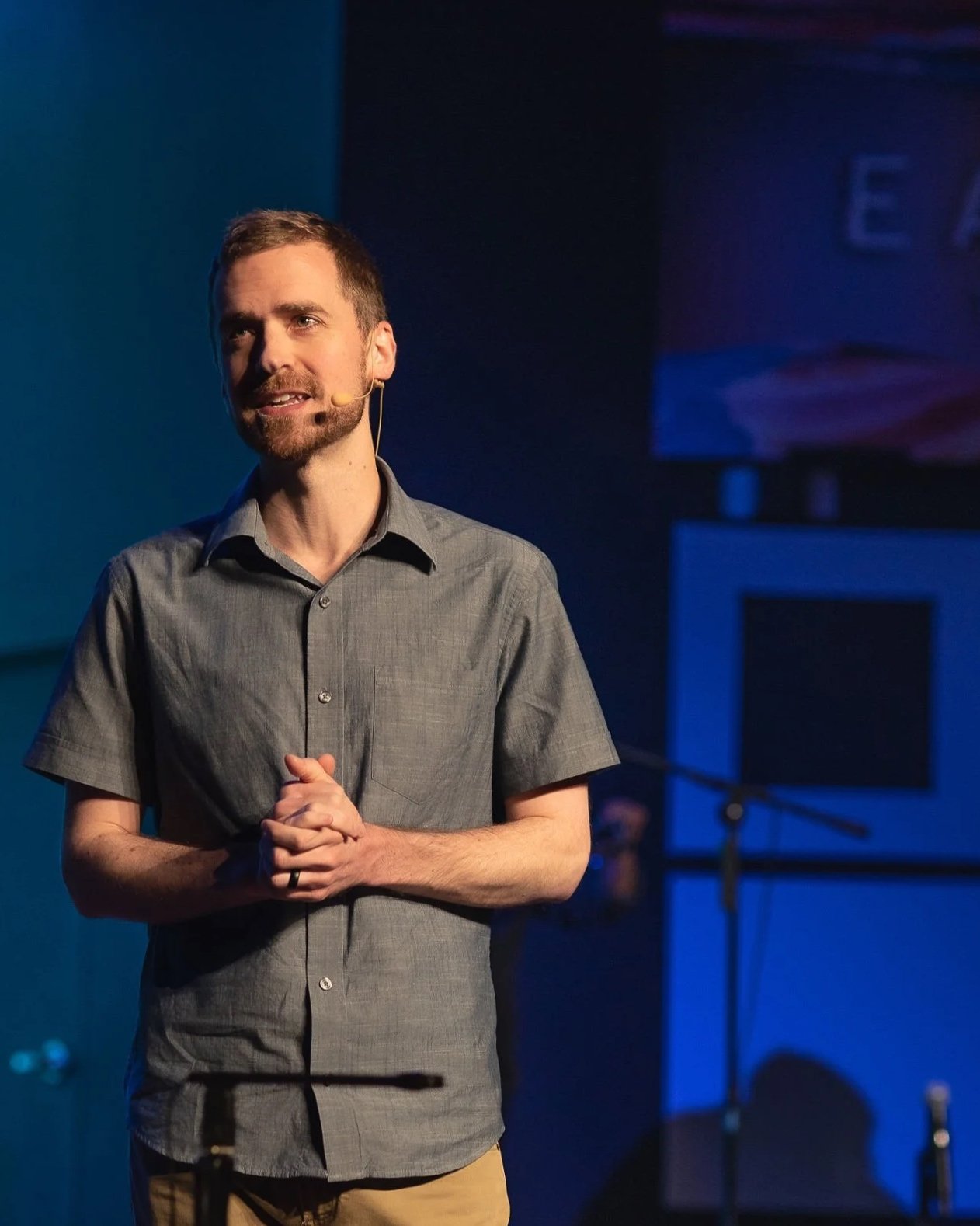
Take a moment to watch this past Sunday’s service - Scott’s story, told in his own words.
Here is the link to the email Scott shared following the service.
Ready to Learn More?
Below is an initial list of frequently asked questions (FAQs).
There’s a lot to learn, and one of the best ways to do so is by connecting directly with those who have ASD, ADHD, OCD, or other neuro-differences. Please don’t hesitate to reach out to Pastor Scott directly (scott@kcc.church), and he’ll be glad to connect and/or connect you with others in our faith community who have walked these paths.

SCIENCE
-
I generally say, “I have ADHD and OCD.” I can swap between saying, “I have autism” and “I am autistic.” For some people, there’s little difference between those two statements, but for others it can refer to a sense of belonging to a particular community (I am autistic). If you’re close to someone with one or more of these conditions, it can often be great to ask.
-
It is a large term used to refer to a host of conditions such as ASD, ADHD, OCD, Dyslexia, Tourettes, and more. The diversity in the term refers to the differences in how brains are wired and function.
-
There is not a blood test for these nor can imaging tests be used for a diagnosis. Instead, there is a significant battery of quantitative, standardized tests. These are then often paired with highly involved, standardized narrative forms (particularly in the case of autism). Ultimately, a trained clinician takes these results and pairs them with clinical observation to decide whether to provide a diagnosis or not.
-
This is a much-debated question. In terms of the Americans with Disabilities Act (ADA), Social Security, and education settings, yes. They are viewed as disabilities outright or in certain circumstances. Beyond this, however, is a larger question of what a term like disability means, how it’s defined, and who ultimately makes the determination.
There is small, but significant scholarship in the area of disability theology and disability studies (spanning education, sociology, and more). One of many important questions raised there is how disability is defined, understood, and integrated into relationships: families, churches, communities, and societies.
Ultimately, some with one or more of these conditions would describe themselves as disabled while others would not. It’s always great to have a conversation! -
That’s hard to say because these terms and concepts—much less our understanding of the human brain and body as a whole—are effectively ‘brand new’ in the scope of human history. It’s generally believed that these differences have always been present but simply explained and understood in different ways.
Most researchers believe the primary driver is improved awareness and diagnostic practices, though this question continues to be studied. -
Each of these conditions—as well as other neurodiverse conditions—have a significant genetic component. There is a different level of genetic ‘impact’ for each one. Environmental factors can play a part in some instances (such as in something like OCD) but genetics play the most significant role.
Claims that a vaccine causes autism have been widely debunked. The vaccine claim came from a single study of just 12 children by Dr. Andrew Wakefield; it was later determined that he both falsified patient data in the study and held conflicting financial interests. He ultimately was struck from the UK medical registry, and the study was later formally retracted by the academic journal.
SCOTT AND FAMILY
-
This has a lot to do with timing. Looking back, many of my limits and challenges in early childhood (and beyond) can be traced to these things. When I was growing up, however, autism and ADHD were known but only in more pronounced and severe forms. In all fields, including medicine, it takes time for cutting edge research to filter into schools and then into practical training and best practices—more so in the pre-internet days!
Also, the presence of my multiple diagnoses along with some of my giftedness subtly shifts the way these ‘show up’ in my life. My clinician told me that had I been born another ten to fifteen years later, I may well have been referred for testing and support in childhood. -
I appreciate you asking! Overall, I’ve been handling it well. It’s been a great gift in my life. First, it has helped me begin understanding practical ways to maximize my strengths and support my limits. Second, it has given me a clear way to begin explaining and understanding both who I am and why I am the way I am.
For much of my life, I’ve had a sense I was different. Certain things came more easily for me while other things came with far greater difficulty and cost. Without even realizing it, I spent much of my life trying to understand and explain things. When left on our own, we can often be less than kind to ourselves and our stories. -
Absolutely! And it has all along. As I shared Sunday, these differences are a source of multiple strengths and limits for me. Every one of us carries strengths and limits, but the way these show up is less common. They enhance my work and ministry—including my preaching, teaching, and leading—in many ways while also presenting other unique challenges to it.
These diagnoses are not new to me. What’s changed is the language, not the person (me). A better understanding of how my brain works gives me a pathway to amplify my strengths and better support my limits. This information will help me be more effective and creative as a pastor.
CHURCH
-
Yes, but those changes will likely be subtle and small. The truth is these diagnoses don’t represent anything ‘new.’ I am the same person and pastor I’ve been since arriving in 2018. What’s different is understanding ways to maximize the strengths of my work and ministry while supporting my limits—something we all likely want to do in our lives.
I have a better understanding now how the way my brain is made affects things like anxiety, focus, creativity, and communication. Small changes such as how I structure my weekly appointments, adapt my environment for focus, and more will only help me bring my best self, and offer my best work, as I continue to pastor. -
There are some resources, but there is a need for more. We are fortunate to have many folks with ASD, ADHD, and OCD call KCC home. If you’re interested in learning more, exploring assessment for yourself or a loved one, or curious about ways to receive/give support, don’t hesitate to reach out to me. I’d love to connect with you, offer some initial resources, and potentially connect you with other individuals or families who have gained hard-won wisdom from traveling similar journeys.
Additional Resources
The resources here are offered as a starting point. If you’re curious about a particular subject or area, or a related area not covered, please don’t hesitate to reach out to Scott (scott@kcc.church) or another pastor.
These resources (web, books) are divided into two groups:
(1) general resources on specific conditions, and
(2) theological and congregational resources.
General Resources on ASD (Autism Spectrum Disorder),
ADHD, OCD, and/or Neurodiversity
Scientific research is rapidly evolving. It is important to consider the age/date/source of any information.
A Brief History of Neurodiversity (web) — good, quick summary of how ’Neurodiversity’ as a concept arose and what it intends
Embrace Autism (web) — rigorous science-based research; includes tools, tests, and more
Start with their Strengths and Challenges of ASD summary. Their blog is where you’ll find 300+ articles on various aspects of the autistic experience—which is unique to each person with ASD!
AutismTN (web) — state-wide non-profit that facilitates groups and events for those with ASD as well provide resource linkage for assessment, support, etc.
On the Spectrum: Autism, Faith, and the Gifts of Neurodiversity (book) — a memoir from an autistic person of faith
Unmaking Autism (book) — recent; one of the most definitive accounts at present
NeuroTribes: The Legacy of Autism and the Future of Neurodiversity (book) — a seminal work in the field that reshaped language and understanding about neurodiversity about 10 years ago
AUSTISM
ADHD
This ADHD Summary and exploration of AuDHD (ASD + ADHD) are helpful — both from Explore Autism
“Exploring the Overlap: OCD and the Neurodivergent Mind” (web)

OCD
Theological and Congregational Resources
Becoming Friends of Time: Disability, Timefullness, and Gentle Discipleship (book) a helpful introduction to thinking about disabilities theologically, written by field-leading expert John Swinton
Autism and the Church (book) — written by an autistic New Testament scholar Grant Macaskill; Biblical reflection and practical reflections
Vulnerable Communion: A Theology of Disability and Hospitality (book) — Thomas Reynolds’ theological account of disability and hospitality based upon his son’s pronounced Tourette’s disorder; theological reflection on his family’s inability to find hospitality and belonging in a local church due to his son’s disability